Wednesday, March 16, 2011

Art and Religion


Art is an important element of a society’s ability to translate its religious belief to its members and to the world. Religion uses verbal arts, music, and pictorial arts in order to preserve its traditions and messages.

Verbal arts, such as myths, are used to explain why a religion has certain beliefs. These beliefs often stem from religious theories of creation and existence. Other verbal arts used to maintain religious timelines and storylines are legends. Legends are stories told and passed down as true accounts of what happened. (Haviland, 2002, pp.394-399). They are intended to support the greatness of a group’s heroes or god. In Ancient Greek society legends about heroes such as Hercules, were told to reflect the strengths and weaknesses of mortals.

Music is also a very important element of religious systems. It is used to unite and identify its members. Music is a very important element in African American religious groups and has developed into a unique style, gospel. The incorporation of traditional African rhythms and harmonies, helped unite this group of people in the south during times of slavery, and gave them a unifying force and power. Gospel was used further to transmit information long distances in the fields, and thus again it was being used as a unifying and communication system. Lyrics in songs also could be used as a way for religions in non-literate cultures to preserve oral histories and mythologies. (Haviland, 2002, pp. 403-406).

Pictorial arts are used as physical representations of religious themes and accounts. Religious art takes on many forms and styles, and reflect the ideologies and mythologies of a society. (Haviland, 2002, pp.406-414). Christian art is based on stories told from the Bible, usually depicting the crucifixion of Jesus Christ, his resurrection, or the Madonna. However pre-Christian symbolism has also been incorporated into these types of paintings that preserve European religious beliefs that pre-date Christianity. These pagan symbols, however, are applied to Christian mythologies. Islamic art, unlike Christian art, does not use figurative themes based on people or animals. This is because portraying humans and animals is seen as a form of idolatry. Therefore they developed a style of art that had an abstract and geometric motif. Words from the Qu’ran are deemed sacred and very important to calligraphy was developed as a beautiful art and used to transmit religious ideologies.

References

Haviland, William A. (2002). Cultural Anthropology. (10th ed.). Fort Worth: Harcourt College Publishers.

Lee, Valerie L., and Searles, Richard T. (2002). Study Guide for the Telecourse Faces of Culture. (8th ed.). Belmont, CA: Wadsworth/Thomson Learning.

The History of Photography


Capturing and commemorating precious moments in time has been a need for humans since ancient times. All over the world Prehistoric men have meticulously painted countless cave walls depicting either hunting and sporting events or other significant moments of their time. Later civilizations across the globe operated in similar fashions constructing either elaborate paintings or laborious sculptures. Each painting or sculpture afterward would strive to appear more and more detailed as if attempting to attain that life-like quality of each moment being projected. Battlefield paintings are littered throughout countless history books and journals in multiple languages with the sole purpose of endeavoring to convey a message in which words alone could not express. It is impossible to imagine how much information has been lost in translation throughout time without the truly marvelous invention of the camera and photography. If important events such as the signing of the Declaration of Independence or the pilgrim's first Thanksgiving feast with Native Americans had been captured on film would they hold more important places in the minds and hearts than they do now? People may never know, but the importance and raw power of photography cannot be denied. Whether viewing a portrait or just a moment caught in time, never has the imagination been captured nor have emotions been pulled to the surface as by the captivating image of a photo.

It is important and necessary to understand and explore the origins, the historical figures, and advancements involved in photography's history before people can appreciate just how far this field moved and exceeded all expectations.

"Photography" is derived from the Greek words photos ("light") and graphein ("to draw"). The word was first used by the scientist Sir John F.W. Herschel in 1839. It is a method of recording images by the action of light or related radiation, on a sensitive material (Bellis, n.d.). Photography has played a crucial role in various societies the world over not only as an intricate art form but also as a significant part in our way of life. From its early beginnings to its key figures of inventors and innovators who ushered in the critical and the amazing technical advancements which have made photography the phenomenon it is today.

William M. Ivins was Curator of Prints at the metropolitan Museum of Art in New York from 1916 until 1946 and published a documentary on photography in 1953 which distinguished between the relationship of traditional techniques of hand-drawn printmaking (the woodcut, metal and wood engravings and lithograph) and photography. Ivins noted that historically, printmaking was not usually practiced as an art form as they are practiced today, but as a means of distributing visual information. Ivins argued that once you begin to examine prints (or pictures) in functional terms you discover that without them very few modern sciences would exist; technologies, archaeologies, and ethnologies. Each of these is dependent upon information conveyed by exactly repeatable pictorial statements (Crawford, 1948).

The idea of photography existed long before the camera was invented. The human urge to produce pictures that amplified the faculty of memory by capturing time is at the theoretical base of photography. Artist and inventors have sought after ways to expedite the picture making process and ultimately concentrated on how to repeatedly capture an image directly formed by light since ancient times. Around the fifth century the Chinese philosopher Mo Ti discovered that light reflecting from an illuminated object and passing through a pinhole into a darkened area would form an exact, but inverted, image of that object, offering a prototype of the pinhole camera. By the 10th century the Arabian mathematician Alhazen demonstrated how the pinhole could be an instrument and that images formed through the aperture became sharper when the opening was made smaller.

Leonardo da Vinci noted in 1490 the earliest surviving description of the camera obscura (dark chamber), which was a device designed to reproduce linear perspective. This was a prototype of the photographic camera and essentially a large dark room in which an artist physically entered. Light would emit through a small hole in one of its four walls and produce a distinct but inverted image onto the opposite wall which could be traced. The camera obscura was popular with artist because it could automatically modify a scene by compressing form and emphasizing tonal mass according to pictorial standards (Hirsch, 2000). In 1589 it was discussed that the use of mirrors could theoretically reverse the image that was reflected backwards into the camera obscura which is now the basis for modern-day single lens-reflex camera. By the 17th century camera obscuras were in frequent use by artist and also made portable in the form of sedan chairs (Bellis, n.d.).

Early in the 18th century the rising commercial class longed to procure the status of being commemorated in much the same pictorial style as of the rich. Multiple inventors had commercial incentives to harness the camera to portrait making, as less training would decrease the costs of making a picture. Machine-based systems for multiple copy production were on the threshold of replacing the outdated handmade methods. One such machine was the physionotrace invented by Gilles Louis Chretien in 1786. This device combined two inexpensive methods of portraiture, the cutout silhouette and the engraving. The operator would trace a profile on a glass using a stylus connected to an engraving tool which duplicated the gestures of the stylus onto a copper plate at a smaller scale. Although it was not a camera, the physionotrace reduced portrait making to a systematic mechanical operation and inevitably expanded the portrait market to the middle class.

In regards to the actual process of photography it was in 1727 Professor J. Schulze surmised that by mixing chalk, nitric acid and silver into a flask images would begin to appear in the presence of sunlight. He noticed a darkening on the sides of the flask which were exposed to direct sunlight and purely by accident was the initial creation of the first photo-sensitive compound (Bellis, n.d.).The first to experiment with in the production of images was Thomas Wedgwood from 1800 to 1802 using white leather impregnated with silver nitrate. It was known at that time that most chemical compounds of silver darkened on exposure to light. Wedgwood was able to produce reversed impressions of objects but was unable to make his pictures permanent by removing the unused silver salts after exposure. Joseph Nicéphore Niépce was the next experimenter and in 1816, even though he was able to produce reversed prints on this material and faint pictures on it in a camera obscura, he had little more success due to the paper eventually darkening. In 1822 he directed his attention to the problem of sensitizing metal plates. Niépce discovered that by coating a pewter plate with a varnish he could produce copies of engravings by placing them in contact with strong light and his coated plates and enabled him to etch his plates and them for printing. This process was later improved by his partner Louis-Jacques-Mandé Daguerre who, after Niépce's death in 1833, established a workable process by exposure to the vapor of heated mercury.

"I have found a way of fixing the images of the camera! I have seized the fleeting light and imprisoned it! I have forced the sun to paint pictures for me!" These were the historical words of L. J. M. Daguerre spoken to Charles Chevalier at his Paris optical shop and reflect the driving desire to make permanent images through the action of light. (Hirsch, 2000, 10). Louis-Jacques-Mandé Daguerre, inventor of the first practical process of photography, was born near Paris, France on November 18, 1789. A professional scene painter for the opera, Daguerre began experimenting with the effects of light upon translucent paintings in the 1820s. In 1829, he formed a joint venture with Joseph Nicéphore Niépce to improve the process Niépce had developed to take the first permanent photograph in 1826-1827.

After several years of experimentation, Daguerre developed a more convenient and effective method of photography, naming it after himself - the daguerreotype. In 1839, he and Niépce's son sold the rights for the daguerreotype to the French government and published a booklet describing the process. The invention was announced to the public on August 19, 1839 at a meeting of the French Academy of Sciences in Paris and his process was used widely in Europe and in the United States. Daguerre's daguerreotype process required long exposure time and made portraits virtually impossible until in 1840 John Goddard cut exposure time in half by treating the plates with bromine and iodine. With this innovation and the development of new lens designs, made possible the idea commercial portraiture. The daguerreotype process went out of use to the general public in the 1850s due to tight patent restrictions which affected application and eventually became obsolete by 1860 (Coe, 1978).

During this time an English scientist, William Henry Fox Talbot, independently devised a camera based imagining process in 1834 using the light sensitivity of silver salts. He invented the salted paper print which was a printing-out process that allowed him to make images without the use of a camera of botanical specimens engravings, pieces of lace, and even solar photomicrographs. By first coating sheets of ordinary writing paper with sodium chloride, letting them dry, and then recoating them with silver nitrate he formed silver chloride which was more highly sensitive to sunlight and reduced exposure time tremendously producing spontaneous images without chemical development. In 1841 Talbot accidentally discovered a process for negative development that he patent under the name calotype. In this process, an exposed sheet of iodized paper was transferred to a darkroom and brushed with gallic acid until a potent negative was developed. It was then that the negative was contact-printed onto unexposed, salted paper in sunlight to form a positive. This process formed the foundation for silver-based photographic systems still in use today.

The negative-positive principle of the calotype process designed by Talbot and the popular daguerreotype were both truly remarkable for their times but not without limitations. A new process evolved from both but without their limitations and would eventually take their place and was referred to as wet-plate photography. It was a photographer's axiom that paper negatives advantages were outweighed by their disadvantages with their resolution limited of fine detail. It was realized that if glass was used the problem would not exist but it simply was not absorbent to carry the coating of light sensitive salts. In 1839 Sir John Herschel was able to produce an image on glass by precipitating silver chloride onto a glass plate and was later perfected by Abel Niépce de Saint-Victor in 1847 by using egg white albumen coated on the glass providing a suitable medium for sensitive salts. A new material for development called collodion was discovered by Frederick Scott Archer in 1851 formed through dissolving a form of gun-cotton in ether. A glass plate was covered with collodion and plunged into silver nitrate and then the wet-plate was loaded into and exposed in a camera. Immediately after exposure the plate was developed, fixed and washed. The collodion negative could record fine detail and subtle tones and also had the advantage of being more highly sensitive than either the daguerreotype and calotype processes. In contrast the gelatin dry plate was first developed by Dr. Richard Leach Maddox who used gelatin instead of ether vapor of the wet collodion plate due to his poor health. It was later perfected by Charles Bennett in 1878 by reducing exposure times drastically, retaining their properties, being easily manufactured and very sensitive.

Pertaining to film and photo depth, one of the most popular photographic novelties which went on display at the Great Exhibition in London in 1851 was the stereoscopic photograph. The mildly dissimilar vantage points provided by the eyes are combined in the brain to give an image in depth. If two photographs of a scene are taken from points of view separated by two about two inches, and are then viewed so that each eye receives only the image appropriated to it, the result is an apparently three-dimensional picture. This principle was first introduced by Sir Charles Wheatstone in 1832 but was not until Sir David Brewster in 1849 introduced an improved device using lenses that the stereoscope became really practical (Coe, 1977).

Another important milestone in photography is that of the photography of action. The early photographic processes were all relatively insensitive. It was impossible at that time to record moving objects without producing a blur on the plate. Specially designed lenses were utilized by Thomas Skaife in his cameras to pass 200 times more light than conventional landscape lenses. Skaife's 'Pistolgraph' camera was introduced in 1856 and after adding the required lens and a shutter powered by a rubber band allowed permitted exposures sufficiently brief to stop the action of slowly moving subjects. Sir John Herschel's name is synonymous with the term 'snapshot' which describes an instantaneous photograph. But it was Eadweard Muybridge who pioneered the process of motion picture photography using gelatin dry plates in the 1880s and eventually led the likes of Professor Etienne Marey and Ottomar Anschutz to document true animals in action. These individuals were often referred to as chronophotographers (Rosenblum, 1997).

Around the mid 1890s public interest began to peak over the publication of the results of chronophotography. This brought about the demand for the development of hand held cameras to replace the traditional and larger stand cameras. Even though small hand held 'detective' cameras were in circulation they were quite awkward and still required multiple cumbersome pieces of hardware that were an inconvenience to everyone but the most enthusiastic of photographers. Even though the dry plate relieved photographers from making their own plates they still had to process and print them requiring knowledge and necessary skills for the dark room. This was answered by the American bank clerk George Eastman who invented the Kodak camera. Eastman felt that photography was too complicated and stated that; "It seems that one ought to be able to carry less than a pack horse load."(Coe, 1978, 13). Though there were some 'detective' cameras that were reasonably small most were bulky. He developed a rolling mechanism and combined it with lightweight sensitive material and decided to construct a camera that would be small and simple to use. In 1888 the first Kodak camera with a celluloid roll-film was developed.

Around the 1850s, photography was viewed by some as a new medium of communication and became hard to discern between art and industry. Eventually it became apparent that photography was considered a business with a widening division of purpose between amateurs and professionals. The latter were motivated by market forces to develop profitable products while the amateurs pursued their personal inclinations and claimed the moral high ground of art, beauty, truth, relegating the professionals to the corner of crass commercialism. Many of England's most notable photographers abandoned their amateur status and turned professional. During the 19th century realism became a force in the arts. Realism sought to counter the idealized subject matter of Romantic and Neoclassical painting with direct and frank views of everyday life. As the public became acquainted with photography's veracity and ability to give significance to everyday experiences, their expectations about how reality should be represented and what subjects were worthy of depiction changed. Ironically photographs became artistic when they looked less photographic by utilizing retouching methods to appear more like a painting. Paintings, on the other hand, were thought to be more artistic if they portrayed more photographic detail. This contradiction resulted in neither medium being valued for its own inherent qualities. (Hirsch, 2000).

The evolution of the camera has advanced beyond all expectations from the digital mega pixel masterpieces we have today to their most earliest ancestors, the camera obscura. Dating back to ancient times, the camera obscura consisted of a pinhole in a contained box. The pinhole would allow light to pass through and project an image on the adjacent wall thus allowing artist to trace the captured image as it appeared at that moment. Niépce, Wedgewood, Talbot are credited with the first portable camera obscuras but it was Daguerre who designed the first cameras to be commercially produced on any practical scale.

The folding box camera, T. Ottewill's folding camera, and portable "dark tent" cameras all gave way to user friendly handhelds such as the momentograph and detective cameras in 1886, the unusual photosphere with its bell-shaped body and hemispherical shutter, the American Tom Thumb camera in 1889, and the Key camera. These box-form cameras eventually became less popular after 1890 and were replaced with collapsing and folding strut cameras.

Kodak sold these forms of cameras in which glass plates or roll films could be used. For a brief time a type of camera was introduced to appear as anything but a camera. The first 'concealment' camera to receive any publicity was Thompson's Revolver camera in 1862 which resembled a pistol. Another was Marion's Parcel Detective camera of 1885 which was supplied in brown paper and tied with a string to appear as a normal parcel and Ross's Photo scope in 1892 mimicked binoculars. Kodak cameras are credited in 1885 with introducing the ingenuity and the marketing of film development roll-film designs. In 1908 still photography was made practical by Audobard and Baradat with 35-mm film due to its small size and handling convenience. The development of Kodachrome, the first multi-layered color film took place in 1936 as did the development of Exakta which pioneered 35 mm single-lens reflex (SLR) cameras. In 1963 Polaroid developed the first instant color film while Instamatic was released by Kodak. Also in this year Nikon released the first purpose-built underwater camera thus changing the way the world viewed oceanography. As the world approached the millennia major advances in the field of computer technology swept the many nations and major advances in film development also transpired in the field of photography. Computer programs such as Adobe Photoshop was released to the public in 1990 and changed the way photography was perceived by allowing users to edit their own pictures. In 1992 Kodak introduced PhotoCD which permitted users to store their pictures on compact disc. In light of this new technology and with the arrival of digital cameras Kodak ceased all production of film cameras. And most notably, the cutting edge technology most familiar to the public is that of camera phones. These multifunctional cameras hit the market from Japan in 2000 and are changing the field of photography and availability unlike anything seen before (Greenspun, 2007).

Through the course of time and painstaking trial and error, the expansive field of photography had grown immeasurably from the exclusive dreams of a handful of visionaries determined to rival the skilled painters and bring to the public what only was available to the wealthy at that time. Cameras and photography have transformed from an artful pastime into an essential way of life touching it in all aspects the public could have never envisioned nor can foresee what will be next in its future.

Through presenting the history of photography in this research it is paramount to stress the importance and necessary to understand the origins of photography and appreciate the many designs that the camera has undertaken since its birth. The field of photography would have undoubtedly fell short in practical use, technological discoveries, and the art community would most likely have suffered a tremendous amount without the inventors and innovations of its past. The advancements involved in photography's history are all but unparalleled in its ingenious technology and reigns as a true marvel for all inventions. Far though as foreign lands may be and alien that other cultures may seem, with a better appreciation of photography our world could be closer captured instantly in snapshot.

References

Bellis, M. Historyof Photography and the Camera. Retrieved June 24, 2008, from www.about.com

Web site: http://inventors.about.com/library/inventors/blphotography.htm

Coe, B. (1977). TheBirth of Photography: The Story of the Formative Years 1800-1900. New York: Taplinger Publishing Company.

Coe, B. (1978). Cameras: From Daguerreotypes to Instant Pictures. New York: Crown Publishers.

Crawford, W. (1948). The Keepers of Light: A History and Working Guide to Early Photographic Processes. Dobbs Ferry, NY: Morgan and Morgan

Greenspun, P. (2007, January). History of Photography Timeline. Retrieved June 24, 2008, from

http://photo.net Web site: http://photo.net/history/timeline

Hirsch, R. (2000). Seizing the Light: A History of Photography. Boston, MA: McGraw-Hill.

Rosenblum, N. (1997). A World History of Photography. New York, NY: Abbeville Press.

Five Great Art Deco Buildings in Los Angeles


RORY & DASAN WEDDING ORLEANS CLUB WWW.PERALESPRODUCTIONS.COM 504.236.8196 PHOTOGRPAHY/VIDEOGRAPHY/DJ by http://www.peralesproductions.com/ WITH NOLA MEDIA


credit


Los Angeles is not known for any one architectural style in particular.  It is a city that contains modern glass curtain skyscrapers and buildings that look like giant hot dogs.  But Los Angeles does have several of the best example of the Art Deco architectural style to be found anywhere.  Here is a guide to some of these sites not to be missed.

Pasadena City College, 1570 East Colorado Blvd., Pasadena

After an earthquake in 1933, building codes in California were updated to prevent structural damage from these inevitable natural shakes.  Pasadena Junior College, as it was known then, had to shut down its three major buildings for restructuring compliance.  These buildings had been named after early 20th century notables: Horace Mann, a social engineer attributed with conceiving the plan for our modern education system; Jane Addams, a proponent of the women's suffrage movement and co-recipient of the 1931 Nobel Peace Prize, and; Dr. Louis Agassiz, a Harvard naturalist who proved the earth had an Ice Age.  None of these notables had any particular connection to Pasadena, or Los Angeles, for that matter.  When the school rededicated its buildings in 1937, it renamed these structures with the bland labels of Buildings C, D and E.  The campus may have lost some names, but it gained a dramatic new quad area.  With the help of funding from the Federal Administration of Public Works, Pasadena City College blossomed into an impressive Art Deco site which is still in evidence today.  The three main buildings are made even more impressive by the campus reflecting pools, or "mirror ponds" as the school refers to them.  This quad area makes a perfect photo opportunity.

Oviatt Building, 617 S. Olive Street, Los Angeles

This opulent structure was built in 1927 by the architectural firm of Walker & Eisen as the headquarters of Alexander & Oviatt, a high-end haberdashery of the day.  It was topped by a luxurious penthouse for owner James Oviatt.  It is reported that the forecourt of the lobby contained over 30 tons of glasswork by the famous French designer Rene Lalique.  Features such as the mailboxes, directory signs and elevator doors were custom created by Lalique.  Most of the glasswork has been sold, demolished or lost over the years.  But some of the original work remains, especially at the lobby column topping panels.  The original Alexander & Oviatt retail space has seen several incarnations of restaurants over the years, but still has the amazing Art Deco ceiling, fixtures and stair rails.  Mr. Oviatt's penthouse was a shrine to Art Deco.  It also dripped in Lalique glasswork and featured geometric parquet inlaid wood floors.  It was known for its terrace gardens, tennis courts, pool and artificial beach with imported sand and palm trees.  A great neon clock tower rises above the penthouse area, reminding us that the time of such meticulously crafted architecture has come and gone.

Eastern Columbia Building, 849 S. Broadway, Los Angeles

Perhaps the most prominent clock in the downtown Los Angeles area is the four-faced clock on the tower of the Eastern Columbia Building in the Broadway Theater District.  This monument to Art Deco was built in 1930 by architect Claud Beelman for Adolph Sieroty, who is not exactly a household name in Los Angeles today, but was the largest retailer of his time.  Sieroty owned both the Eastern Outfitting Company and the Columbia Outfitting Company, selling furnishings, appliances and clothing.  This building served as dual headquarters, with each company occupying opposite sides of the structure.   The structure is distinctive for its glossy turquoise colored terra cotta cladding and gold leaf detailing.  Art Deco motifs abound, with chevrons, stylized plants, zigzags and sunburst patterns.  Originally, the building was meant to accommodate mixed use, with office space above a retail pedestrian arcade.  Sieroty's son remodeled in 1956 to pure office space.  The building experienced refurbishing in the 1980s, and is currently being convered to accommodate residential units.

Southern California Edison Company Building, 601 W. 5th Street, Los Angeles

Everything about this building says it it the home of a major utility company.  The entrance to the limestone and terra cotta structure features Art Deco friezes of allegorical figures rendered by sculptor Merrell Gage in symbolic representation of light, power and hydroelectric energy.  Inside the lobby, a huge mural by Hugo Ballin tells the story of the Edison Company as the alchemist that magically turns water into power.  It is titled "The Apotheosis of Power."  The dramatic punch of this structure has been watered down by the addition of a shopping corridor in the 1990s, but enough of the original remains to deserve a visit.

Bullocks-Wilshire Department Store, 3050 Wilshire Blvd., Los Angeles

It is more accurate to refer to this site as the Southwestern University School of Law, as that is the new proprietor.  Although the building no longer serves as a retail store, it is alive and well as the university's law library and administrative offices.  It is such adaptive reuse that saved Bullocks from possible demolition and oblivion.  What a loss it would have been.  This outstanding example of Art Deco was designed by architects John and Donald Parkinson in 1928.  It was one of the first businesses to recognize the rise of automobile traffic over pedestrian traffic.  In order to accommodate, the floorplan in essence turned its back on Wilshire Blvd. and opened its portals to the parking lot on the reverse side of the building.  It is on that side you will find the grand porte cochere featuring a gorgeous fresco on the ceiling by Herman Sachs paying tribute to modern modes of transportation.  A dominant aspect of the Bullocks building is the 241 foot tower rising from the north fascade.  This outstanding structure rests on a black marble base and has copper spandrels and chevron details between tan colored terra cotta.  The copper has oxidized to a rich green, giving the whole structure a sophisticated patina. 

Sunday, February 27, 2011

Shooting for Stock Photography


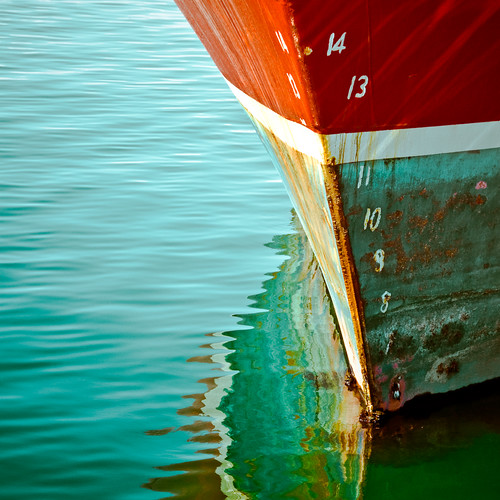
Cuba Gallery: Typography / water ripple / blue / red / color / reflection / ocean / texture background / ship / sea / boat / numbers / photography by ►CubaGallery


Photo Credit: celtics baby clothes


A great way to earn money and learn a lot in the internet is participating in stock photography. Stock photography has been around for a while. And there are a lot of great stock sites that sell photographs for a reasonable price.

Just how and what should you shoot to be able to participate in stock photography?

Photographers say you should start with the concept. But the very first thing you should do is to know your equipment. I literally spent ten times more time trying to know how my camera works than thinking of something to shoot.

Stock photography is a very demanding industry. It's as close as you'll get to professional photography. It requires you to be able to produce images of the highest quality. That is because this industry is very competitive.

Try shooting the same subject with different settings. You should know how your camera reacts with different kinds of light. You should also know how it responds to different levels of illumination. Note the differences you see and keep them in mind.

Next you need a concept. Your images should present an idea, a thought or an expression. Consider a photograph of a man typing on a computer. What is he doing? Why is he typing? Is he working? Is he Blogging? Or just playing?

Designers buy stock images because of the concept they present - not because they look good. Stock photos are used in web sites, brochures, magazines, publications, advertisements, and almost anything that has a print.

So you need to have an image that has a concept that satisfies the needs of the would-be buyers of your pictures.

Then, you need a lot of light. Stock photos require that images have the right level of illumination and contrast. They need to be clear. If you can't afford a big set-up, you can always use desk lamps or even the sun.

You'll also need a computer and two kinds of programs: noise reduction tool and a photo editing application. Most stock photographs go through a noise reduction process. They also get a little tweaking in color, contrast and brightness.

Stock photographs need to be as close to perfect as possible. It's like what they say in the computer graphics industry: "it does not matter how you do it as long as you get the job done." Don't think that editing a photo in your pc is cheating. That only goes for journalism.

The next is pretty simple. You need a stock agency to upload your images to. Or you can showcase your work in your own site. Uploading in stock agencies is better. That is because you can find out where and how to improve. Use their powerful community to find out your weakness and strengths as a photographer.

Then when you have all this, what you need to do next is to be consistent and improve and improve and improve. You need to keep up with the ever demanding industries. If you don't, you'll get left behind.


Wildlife Photography: Tips to Learn the Basics of Wildlife Photography


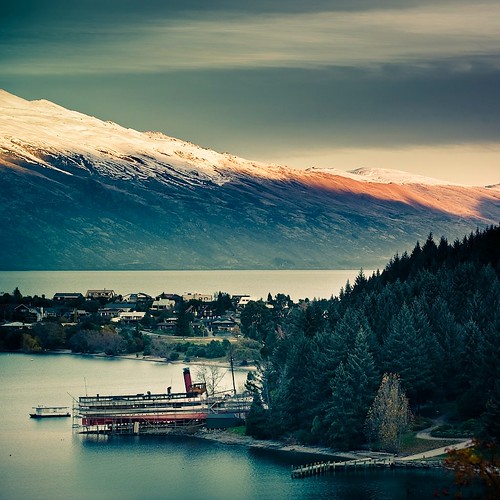
Cuba Gallery: New Zealand / landscape / mountains / lake / amazing / beautiful / nature / trees / sky / clouds / photography by ►CubaGallery


photo source


If you really want to learn the art of wildlife photography, then you should be aware of the basics of wildlife photography. It is rightly said that wildlife photography is one of the most challenging but rewarding hobby or career. It takes honest practice, persistence and hard work to master the real art of wildlife photography.

For mastering wildlife photography you have to have the basic knowledge of camera handling. As majority of the photos you take will be captured with the help of telephoto lens. This will test your patience and dedication as you have to wait a much longer time for the animal to come in the range and taking right pictures through right angles before that wild animal leaves from the site. Many of the times the animals you want to shoot will be yards away from you so that you have to take your pictures with more precision and care with zoom lenses.

While shooting wildlife you always have to watch out for minute movements happening around you. And for that purpose you have to be attentive for the longer time. The sunlight also plays a very important role in taking these wildlife pictures. For this purpose your camera should have the proper adjustments according to the various angles of sunlight so that pictures will be much clearer without any fuzz.

Also wildlife photography is all about capturing a particular moment of the wildlife. It makes or breaks your photography style. Many of the best wildlife photographers out there are really skillful in shooting the exact speed and momentum of the particular animal they are watching. But to be the best wildlife photographer out there you should first master the basics and you can begin this process by starting to shoot your own home pets. If you learn to shoot their natural movements and habits in their natural style then you can say that you are ready for outdoor wildlife photography.

There are no shortcuts to learn the basics of wildlife photography. Rather you have to practice it religiously and with full devotion. You should have to pay a special attention to your cameras. You have to take care that your camera has a quick shutter speed which is very necessary to take more than one shot as you roam around the wildlife to take pictures. In this type of photography most of the times you have to follow your subject to shoot many pictures at a time in one shot. This process is mainly known as "panning" which consists of taking faster pictures in one snap as you mover closer to a particular animal you want to shoot.

Thus wildlife photography is all about your patience, persistence and shooting skill where you need to wait a longer time to take the perfect picture. But at the end of the day it is also the most satisfying art where you get the really thrilling and enjoyable experience to cherish for.

Saturday, February 26, 2011

Six Tips to Help You Clean and Organize Your Photography Studio


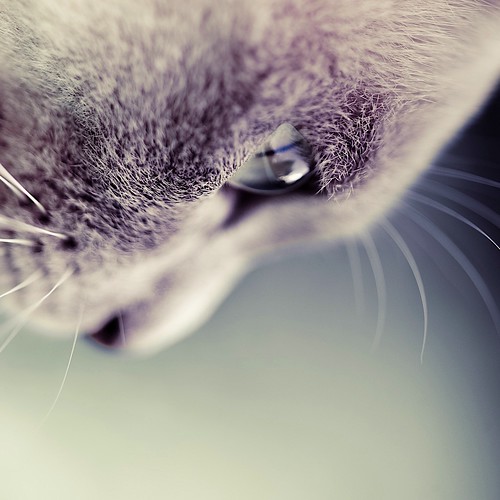
Cuba Gallery: Cat / pets / animals / eyes / kitten / cute / photography by ►CubaGallery


source,credit


1. Photography Studio Organization - Use good old fashion hanging files.

Believe it or not, in this digital age, the classic green hanging folder is still a great organization tool. Using manila folders to organize your photography studio's bills, invoices, and receipts is a good start. It is a lost cause however, if you don't have an organized place to put them. The hanging folder is the perfect place to put them

Don't have a filing cabinet to put the hanging folders in? Not a problem. There are several options available at your local retail store. I prefer the clear Rubbermaid bins. They are about 8 inches wide. This means they are easily stored in closets or on a bookshelf. Since photography studio space is usually valuable real estate, these smaller file boxes might be the way to go.

2. Photography Studio Organization - File your files

A great way to keep your files organized is to keep a file of all your files. What do I mean by this? Keep a piece of paper in your photography studio with all of your file folders on with their names. If the folders have sub-folders, list those too.

This will let you see if you have folders that overlap so that you can condense your folders. For example, there is no point in having studio file and a studio equipment file.

You could have this list written on a piece of paper, but that would just be one more piece of paper to file. Try keeping this record in a word or excel document. That way you have one less piece of paper in your office and you can update it much easier when you add new folders and files.

3. Photography Studio Organization - Throw things away

For some reason most photography studio owners have a fear of throwing client paperwork and photos away. There are certain things that you just don't need to hang on to. If you are a digital photographer there is no reason to hold on to basic prints. Create a varity of back-ups and toss the prints. You can always re-print them. If you aren't a digital photographer and have a traditional photography studio, invest in a scanner. This way, if you must hold on to prints for color purposes, you can scan them and toss the print.

There are some things you need to hold onto though.

Tax items are one thing you should hold onto. You should save your tax returns forever. The rest of your tax reports and receipts should be saved for no longer than six years.

Throw away papers that you don't have an immediate need for, can get a copy of easy, or that don't have any tax or legal reason to hold on to.

If you feel like you need to hold on to all your photography studios paperwork, than try scanning it all onto a portable hard drive. Then you can throw all the papers away. It will take more time than growing through all the papers away, but at least the hard drive will take up less space in your office.

You can scan model's head shots for reference later. You can scan pose ideas from magazines so you don't have clipping all over your photography studio.

4. Photography Studio Organization - "Assorted" Folders

How many other, assorted, or misc files do you have in your photography studio? You know, the folder that you put everything in that you just don't know where else to put it. That isn't organization. Odds are you can just throw it away altogether. A good rule of thumb is, if you haven't needed it or touched it in a year then toss it.

5. Photography Studio Organization - Get rid of business cards

There are so many ways to organize all your business cards, model head shots, and contact information. There are plenty of ways to get rid of it altogether as well. A simple approach is to take the business card or headshot and tape it or staple it the file folder it is associated with. At least then it is filed away instead of in a pile on your desk or in a drawer.

There are lots of gadgets out there made for scanning in business cards to your computer. If you are a digital photography studio, you probably already have a scanner, put it to good use. If you don't have the money for one of these than just take some time to enter the contact information into your electronic address book. Outlook has a great address book or you could even use your email clients address book. Anything is better than having them just laying around waiting to get lost.

6. Photography Studio Organization - Use the computer

Try using your photography studio's computer as much as possible. Use it to make your to-do lists, create address books, file documents, and more. The more you keep or put into your computer the less you have in your photography studio.

As I mentioned before, there are plenty of gadgets out there that can help you scan your files into the computer. Take advantage of them!

DIY Wedding Photography on a Budget


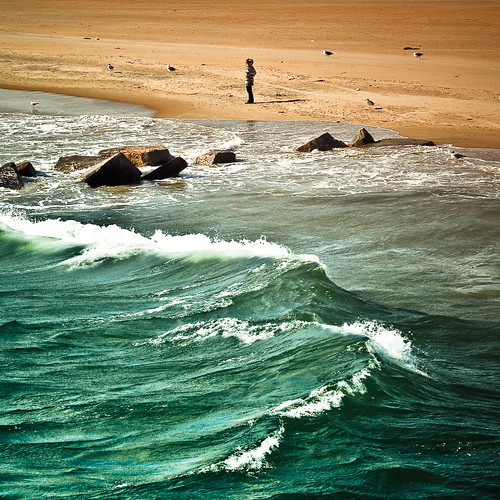
Cuba Gallery: Wave / beach / ocean / sea / green / nature / people / Coney Island / New York / photography by ►CubaGallery


source


So, your wedding is fast approaching and you want memories that will last a lifetime. However, you are on a budget and don't have a lot of money to spend for a professional wedding photographer. You can still get professional-looking, creative, memorable pictures with DIY wedding photography.

The first thing to do is to find someone who takes great pictures. This doesn't have to do be a professional photographer. Many people have a "great eye" and instinctively know how to take great pictures. Think of friends or family members who you've complimented on their photography from vacations, for example. Another way to find a cheap wedding photographer is to look on local college bulletin boards, or post on them yourself in the art department or photography department. Many students have amazing talent, but since they are still a bit inexperienced, will be your wedding photographer for a fraction of the price of a professional wedding photographer. Some may even photograph your wedding for free, for no more than a free meal and use of your wedding pictures for their portfolio. You can also consider putting an ad on Craigslist for a hobbyist who is not a professional wedding photographer, but has an artistic eye and loves to take pictures. Get samples of work and negotiate a price you are both pleased with.

Whether you use a talented stranger or an artistically-inclined friend or family member as your wedding photographer, make sure they have a good camera. You may even consider purchasing a good quality, digital camera that you can give them as their "payment". If you need to purchase a camera for your DIY wedding photography, make sure you give it to the wedding photographer in plenty of time for them to learn the ins and outs of the camera, so they can adjust the settings. Digital cameras also allow for easy editing, so you or your DIY wedding photographer can edit your wedding pictures. Also, digital cameras have a large capacity to store many pictures, with a memory card they can hold hundreds of pictures, so you will have plenty of wedding photos to choose from to preserve your special day.

Another idea is to meet with your DIY wedding photographer to develop a plan of what you want photographed. Remember, since you will be saving a lot of money by not hiring a professional wedding photographer, you will have to do some of the work yourself. This includes providing the DIY wedding photographer with a list of what you want photographed. This may include photographs of the wedding rings, the wedding invitations, the bridal party, the groomsmen, the family of the bride, the family of the groom, the bride and groom's first kiss, the wedding service, etc. This will help you and your DIY wedding photographer be on the same page and know each other's expectations beforehand, so you get exactly what you want on your special day.

Also, encourage others to take pictures of your wedding. Some of the best wedding photography are those wonderfully candid moments caught by some of the guests. Some wedding couples choose to put disposable cameras on tables for guests to take photographs of, then ask that they leave the cameras when they leave the wedding reception. Some give the cameras out as wedding favors and ask that any great wedding photographs be sent to the married couple.

Lastly, consider the best of both worlds. You can hire a professional wedding photographer for a short period of time to take a few very specific pictures, then rely on your DIY photographer and wedding guests to take the rest of the photographs. This will eliminate a lot of cost for a professional wedding photographer. You can also opt to don your wedding attire a few days after the event and go to a studio to have a few professional pictures taken.

Remember, it doesn't take a professional photographer to take some amazing, creative, professional-looking wedding photography. Have a great day!